Download

Tomb Raider Story Explained: Lara's Yamatai Journey (Light Spoilers)

The story of Tomb Raider explained with light spoilers: the Endurance expedition, Himiko and the Sun Queen, the Solarii cult and how Lara's origin story ends.

Rated 4.9/5 · 5.7k

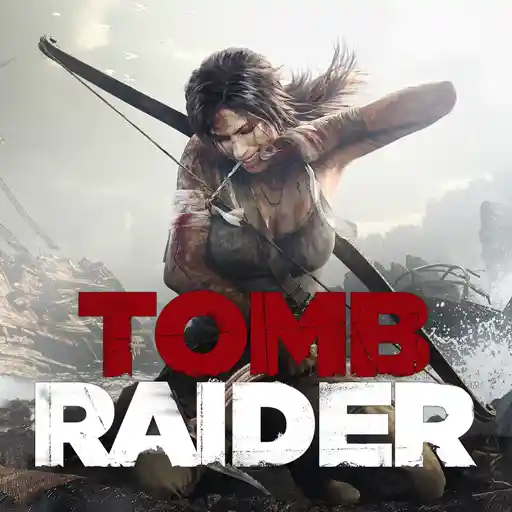
Tomb Raider tells the origin story the franchise never had: how Lara Croft went from a sheltered archaeology graduate to the survivor the world knows. It is a story about an island that eats ships, a queen who refused to die, and a young woman learning what she is willing to do to bring her friends home.

This explainer walks through the plot with light spoilers: the setup and themes in full, the ending discussed in broad strokes rather than scene by scene. If you would rather know the systems first, our Tomb Raider Android game guide keeps the story at arm's length.

Read on if you have finished Tomb Raider and want the threads gathered, or if you are deciding whether this darker, more human Lara is for you. She is, but the island will make her earn it.

Spoiler policy, stated once: major revelations are discussed in terms of what they mean rather than how they are staged, and the final sequences are summarised, not narrated. Players mid-campaign can read the early sections safely.

A word on Sam deserves its place here: the story works because the stakes are personal before they are cosmic. The Sun Queen's mystery would be an engaging puzzle alone, but it is Lara's friend wearing the target that converts archaeology into urgency, and the finale's choices land because of it.

The Expedition: Searching for Yamatai

The story opens with Lara, 21 years old and fresh from university, joining the crew of the salvage ship Endurance. The expedition hunts the lost kingdom of Yamatai, home of the shaman-queen Himiko, and it is Lara's own research, overruling the captain's safer course, that steers the ship into the Dragon's Triangle.

That decision matters to everything that follows. When the storm tears the Endurance apart on Yamatai's reefs, the guilt is Lara's to carry, and the game never lets her, or the player, forget that the crew is stranded because she was right about the island and wrong about the cost.

The expedition's moving parts:

  • Lara's research into Yamatai
  • The Endurance and her crew
  • The Dragon's Triangle course
  • The storm that ends the voyage

The Crew of the Endurance

The survivors give the story its heart. Sam Nishimura, Lara's best friend and a descendant of Yamatai's royal line, anchors the plot's danger. Reyes, Whitman, Jonah, Alex and Grim each represent a different answer to the island: pragmatism, vanity, loyalty, courage and sacrifice.

Lara's growth is measured through them. Early Lara apologises for surviving; late Lara leads. The campfire conversations and radio calls carry that evolution quietly, which is why the game keeps returning to its small cast instead of widening it.

The crew, briefly:

  • Sam: Lara's best friend, of Yamatai descent
  • Reyes: the ship's mechanic and sceptic
  • Jonah: the loyal heart of the crew
  • Whitman: the celebrity archaeologist
  • Alex and Grim: courage in two generations

The Solarii: The Island's Cult

Yamatai is not empty. The Solarii, a cult of the shipwrecked led by Father Mathias, worship Himiko and hunt every new survivor the storms deliver. Mathias has been trapped for decades and has built a religion out of the island's central fact: nobody leaves.

The Solarii make the story's violence purposeful rather than decorative. They are victims of the island turned into its instruments, and their belief, that Himiko's chosen vessel is the key to escape, drives them to hunt Sam with a zeal that escalates the entire plot.

Himiko and the Storms

The island's mystery is meteorological and supernatural at once. The storms that wreck ships are not weather; they are the lingering power of Himiko, whose spirit never completed its transfer to a successor centuries ago. Her guardian Oni, the Stormguard, still protect her tomb and enforce her will.

This explains the Dragon's Triangle itself: the storms are a dead queen refusing to let her kingdom be disturbed, and every wreck on the reefs, from warplanes to the Endurance, is evidence. The supernatural thread stays grounded because the game treats it as history the characters must research, not magic they can use.

The mystery's rules:

  • The storms are Himiko's lingering power
  • Her succession ritual never completed
  • The Stormguard still defend her tomb
  • No ship leaves the island

Lara's Transformation Arc

The famous first kill sets the arc's terms: Lara weeps after shooting a man who was strangling her, and the game refuses to make it easy. From there the arc is accumulation. Each rescue, each loss, each camp crossed off the map moves her from apologising for violence to planning it, competently and with visible cost.

Crucially, the story never frames the transformation as corruption. Lara becomes harder because softness got people killed, and her empathy survives the hardening: she risks everything for her friends precisely because the island taught her what survival without them would mean.

The Middle Acts: Rescue and Revelation

The campaign's middle braids rescue missions with archaeology. Lara crosses the island gathering the scattered crew, uncovers wartime experiments and ancient records, and pieces together the truth about Sam's bloodline before Mathias can act on it. Each region teaches one part of the mystery while raising the personal stakes.

The balance is the reboot's real achievement: the tomb raiding is the plot. Relics and documents, the collectibles other games scatter as filler, are here the evidence trail Lara herself follows, which is why exploring Yamatai feels like participating in the story rather than pausing it.

The Ending, in Broad Strokes

Without spoiling the final sequences beat by beat: Lara understands what Mathias intends for Sam, reaches the heart of the island's power, and makes the choice the whole story has been building toward, between the safe escape the cult promises and the truth she has uncovered about Himiko.

The resolution honours both halves of Tomb Raider. The supernatural mystery closes on Lara's terms, decided by her research and her nerve rather than by a bigger weapon, and the emotional story closes with the crew, changed and diminished, finally facing the sea. The last lines reframe the entire adventure as a beginning, the first chapter of the raider she becomes.

Themes: Guilt, Belief and Becoming

Guilt drives Lara, belief drives Mathias, and the island tests which force is stronger. Tomb Raider is unusually interested in what people do with unexplainable suffering: the Solarii built a cult, Lara builds competence, and both are answers to the same storms.

It is also a story about the cost of being right. Lara's research was correct at every step, about Yamatai, about Himiko, about the way off the island, and being right saved no one by itself. Knowledge becomes survival only when paired with the willingness to act on it, which is the whole arc in one sentence.

The story keeps asking:

  • What survival costs the survivor
  • Whether being right is enough
  • How belief grows in hopeless places
  • When rescue becomes leadership

Documents Tell the Island's History

Players who read the collectible documents receive a second story underneath the first: wartime officers, earlier expeditions, the Sun Queen's court and Mathias's decades of descent. Our collectibles and documents guide explains where these texts hide and why they are worth the detours.

The writing rewards the effort. Several document sets reframe characters you have already met, and a few quietly foreshadow the ending's central revelation hours before the story states it plainly.

No Prior Games Required

This is a reboot in the fullest sense: no knowledge of classic Lara, her dual pistols or her earlier adventures is assumed or needed. References exist for longtime fans, an outfit here, a musical nod there, but the story stands entirely on its own as an origin.

It also works in reverse. Players who start here often find the older games reframed, because this Lara's fear and growth explain the confidence the classic character simply possessed. Origins are powerful precisely because they are beginnings.

Conclusion

Tomb Raider's story succeeds because its adventure and its archaeology are the same activity: Lara raids tombs to understand the island, and understanding the island is how she saves her friends. Himiko's storms, Mathias's cult and Sam's bloodline converge into one question, what survival costs, and the game makes its heroine pay the full price of answering it.

Play it once for the adventure, then again for the documents and the campfire scenes you rushed. Yamatai's story is richer the second time, when you know why the storms never stop.

Notice, on a second playthrough, how early the game tells you everything. The documents, the murals, the warnings from other survivors: Yamatai announces its rules honestly from the first hour. The tragedy is never that nobody knew. It is that knowing was not the same as escaping.

Portrait of Sarah Lindholm

Reviewed by Sarah Lindholm

Adventure Games Reviewer

Sarah Lindholm reviews Android adventure games, with a soft spot for big single player stories that survive the move to mobile. She played the full Yamatai campaign on Android for this site, testing touch, gamepad and keyboard controls, and checks performance, storage and update details on real devices before writing about them.